What to prepare before commissioning a retail fixture program
Most rework in a fixture program is decided before anyone cuts a sheet of material. A dimension nobody confirmed. A finish approved on a screen. A store list that changed after drawings were issued. None of these is a fabrication problem, yet each one becomes one.
What follows is what we ask brand teams to have ready before a program starts. Not every item will be final on day one. The point is to know which ones are, and to name who will close the rest.
Brand and visual merchandising guidelines
Start with the rules that apply to every fixture: logo use, color references, approved finishes, typography, and how product is meant to be presented. Visual merchandising guidelines matter as much as the brand book, because they define what the fixture is for. A display that is beautiful but holds the wrong number of bags is still wrong.
If guidelines are being updated, say so. Building to last season's standard is a common and avoidable cause of remakes.
The fixture list, with quantities
List every fixture type, how many of each, and which stores receive them. Quantities drive how a piece is made. A fixture built once can be handled as craft. The same fixture built for every store needs to be engineered for repetition, so that the last one matches the first.
The store list and floor plans
Provide the stores in the program and a current floor plan for each, with the fixture positions marked. Plans go out of date quickly, so a site survey follows, but a plan gives everyone the same starting point. The Panerai holiday program worked because one production run was kitted to each site survey, so different storefronts in different cities received the same result.
Dimensions and tolerances
State the dimensions that are fixed and the tolerances that are acceptable. Some limits are obvious, such as the width of a niche. Others are not, such as the clearance a door needs to swing, the height of a sprinkler head or the depth a counter can project into an aisle.
Tolerances need agreement from both sides. A dimension on a drawing means little until everyone agrees how close is close enough, and where any difference is taken up.
Materials, finishes and sign-off samples
Agree materials and finishes on physical samples, viewed under store lighting, and keep a signed reference set. Screens and printed swatches misrepresent color and sheen. A lacquer that reads as one tone on a monitor can read as another beside the product.
Signed samples protect the program later. When a question comes up in production, the answer is the sample, not someone's memory of a meeting.
Product and planogram assumptions
Tell us what goes on each fixture: the products, their sizes and weights, how many face out, and the planogram the fixture must support. Shelf spacing, load and lighting all follow from it. If the assortment is likely to change during the life of the program, design for the range, not the launch set.
Power and data
Note which fixtures need power, where the store's supply points are, and whether screens, players or lighting need data. Digital elements bring their own tolerances, since screens need housings, ventilation and service access.
On the Fendi × Skims launch on 57th Street, the physical build and the LED screens shared one fixed launch date inside an operating flagship. The screens were integrated, tested and run through before handover, which only works when power and data are planned with the build, not after it.
Shipping, receiving and storage
Confirm how each store receives deliveries: dock or front door, lift sizes, delivery hours, and whether there is anywhere to stage crates. Decide early whether fixtures ship straight to stores or are held and released in waves, and who stores spares or seasonal pieces between uses.
Installation windows and store hours
State when installation can happen at each site. Operating stores usually mean work after closing, and malls and buildings add their own rules. These windows set the pace of a rollout more than any other factor, because a crew can only work the hours the site allows.
Recurring work benefits most from planning here. The Berluti installations of 2021 were recurring changeovers in an operating boutique, so walls, plinths and platforms were prefabricated in our shop, installed fast and styled on site.
Phasing and rollout order
Decide which stores go first and why. A flagship often leads, so the program can be proven where it is most visible before it repeats. Others prefer a pilot store with fewer constraints. Either is valid. What causes problems is an order that changes after production is scheduled, because fabrication, freight and crews are all sequenced around it.
Approvals, and one decision maker
Name the person who signs off drawings, samples and changes, and the people they consult. Programs slow down when approvals go around a committee without an owner. They stall when two stakeholders approve different things.
One decision maker, with a known turnaround for approvals, does more for a timeline than any amount of acceleration in the shop.
What "done" means
Agree, in writing, what completion looks like: every fixture installed and level, power tested, product placed or not, the space cleaned, documentation handed over, and the punch list closed. Agree as well who checks it, and when.
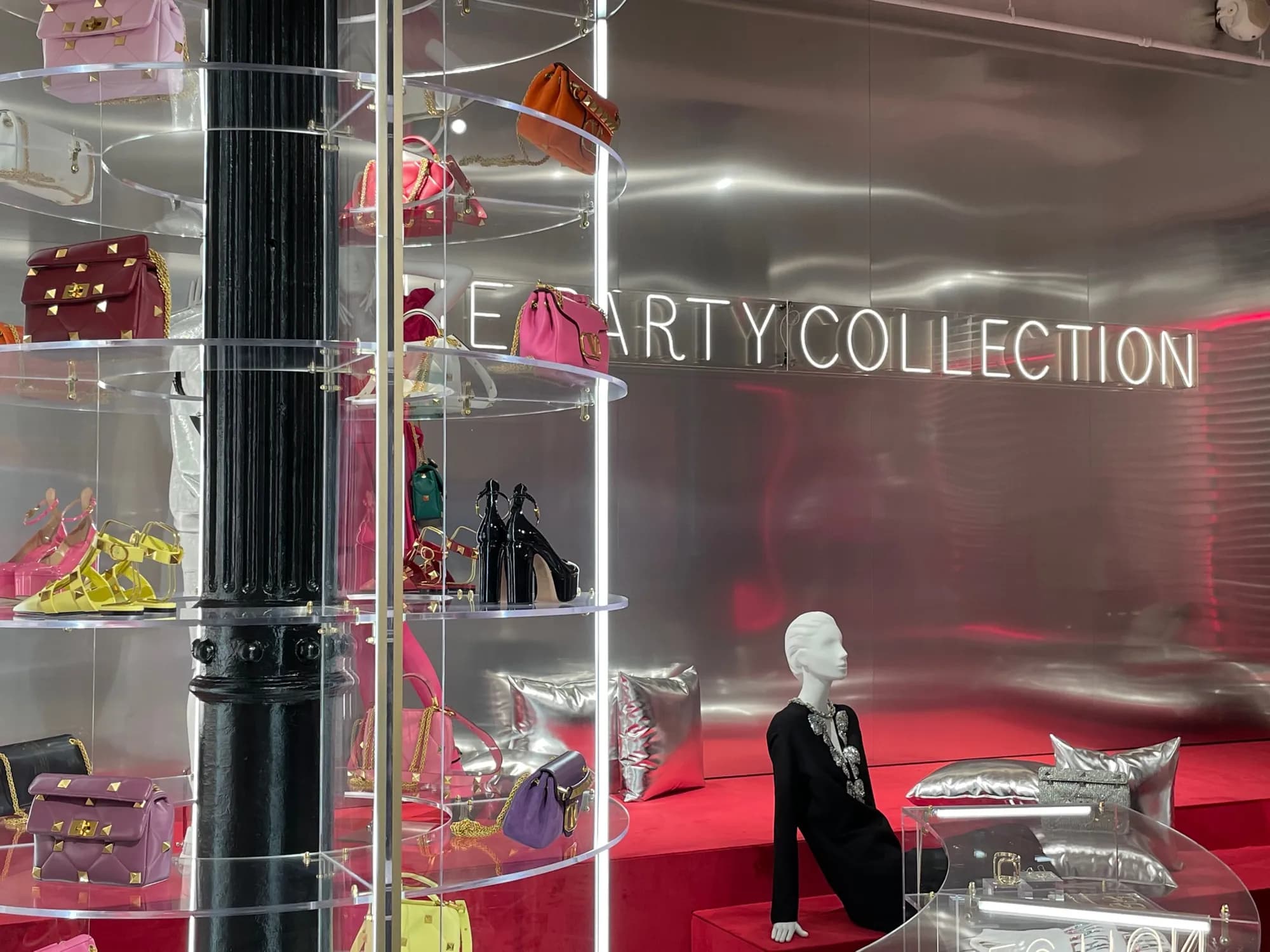
A shared definition of done turns the handover into a confirmation rather than a negotiation. The Valentino Party Collection install ran across a store and a museum venue with one production package, fabricated centrally and installed to the same checklist at both sites. The checklist was the definition of done.
A program without rework
Very little on this list is technical. It is mostly clarity: decisions made once, recorded, and owned. Brands that bring it to the first meeting tend to spend their budget on the fixtures themselves, rather than on making them twice.